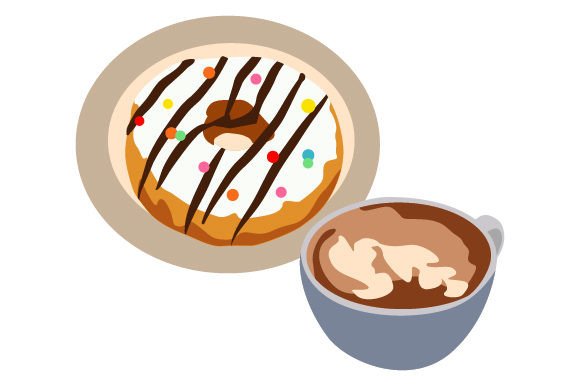
Coffee Cup with Donut for Crafts & Coffee-Themed Products
When I first opened the folder for this Coffee Cup with Donut graphic, I immediately scanned the file list: a clean SVG, a transparent PNG, an EPS, and a DXF. That kind of multi-format delivery already tells me the creator is thinking about how real sellers use design assets across different platforms. No extra fluff—just the core vector and raster formats that matter for print-on-demand, cutting machines, and digital re-sale. My first impression was that this graphic sits in a cozy, slightly playful, everyday coffee-lover niche. It’s not ultra-minimal, nor is it overly rustic. The visual personality leans toward a charming, hand-drawn or illustrative style that would appeal to someone who enjoys morning rituals, café culture, and warm, approachable branding. The mood is friendly, not too childish, and the composition, presumably a coffee cup paired with a donut, instantly suggests comfort, treat-yourself moments, and casual indulgence.
From a product-selling angle, I see this asset working best for buyers who are looking to add a relatable, food-and-drink graphic to their own craft projects or merchandise. The subject matter is universally recognizable, which means it can attract a wide audience without being overly niche. The coffee and donut combination is a classic pairing that performs well across multiple seasons, from Mother’s Day brunch themes to fall cozy collections, or even Valentine’s Day treat bundles. Because the file set includes a DXF, I know it’s ready for Cricut and Silhouette users who want to cut heat transfer vinyl for mugs or tote bags. The SVG ensures clean scalability for everything from a small sticker to a large wall decal. The transparent PNG is perfect for Canva template sellers who need a quick overlay for social media graphics or printable wall art. The EPS adds an extra layer of flexibility for those who work in Adobe Illustrator for more advanced commercial design projects.
After reviewing hundreds of design assets, I’ve learned that the real test of a graphic isn’t how it looks in isolation, but how it behaves in actual product mockups. So I started mentally placing this Coffee Cup with Donut onto a few product scenarios. For a digital download shop, I’d first test it as a printable. Imagine a set of coffee-themed planner stickers—the PNG file would need to be sharply defined at around 300 DPI, and the transparent background must be genuinely clean, with no stray hairline edges. Next, I’d test it on a sublimation mockup for a ceramic mug. The design should wrap comfortably without awkward cropping, and the colors need to remain vibrant on a white or light background. For a Cricut project, I’d load the SVG into Design Space and check for any complex overlapping paths that might cause cutting issues. The DXF file would need to import cleanly into Silhouette Studio, preserving all the intended cut lines. In my experience, many crafters abandon a design if they have to spend too long cleaning up nodes, so this is a critical step before I’d ever list a finished product using this asset.
How a Simple Coffee Graphic Can Strengthen a Product Collection
One of the smartest ways to use a design like this is inside a themed bundle. A single Coffee Cup with Donut may feel limited, but when paired with related coffee shop elements—steaming mugs, coffee beans, latte art, or even handwritten coffee quotes—it becomes part of a broader story. I often test a new graphic by building a mock collection around it. For instance, I’d create a few Canva templates: a café menu, a loyalty card, and a social media post. Then I’d drop the transparent PNG onto each template, adjust the size, and see if it holds visual weight without overwhelming the text. A good graphic should be versatile enough to sit underneath a bold serif font for a premium look, or beside a playful script font for a more whimsical vibe. In this case, the coffee and donut theme feels adaptable to both feminine, pastel-colored branding and darker, bolder coffee shop aesthetics. The key is to test it on both white and dark backgrounds early on. Some designs lose their charm when inverted, or the line art becomes too thin against a dark backdrop. I’d want to see how the PNG’s transparency holds up and whether any subtle details disappear.
From a commercial standpoint, the value of a design asset like this multiplies when you consider the variety of physical and digital products it can support. For a print-on-demand seller, it could become a t-shirt graphic, a tote bag centerpiece, a tumbler wrap, or a mug print. For a digital product creator, it can be the focal point of a printable greeting card, an invitation template, or a set of iron-on transfers for canvas pouches. Even a blogger could use it as a consistent visual element in featured images, helping to build a recognizable brand identity around coffee content. The fact that the file is available in multiple formats lowers the barrier for entry across these applications. You don’t need to convert anything; you just pick the right file type for your workflow. For a Cricut user, the SVG is the star. For a Canva template seller, the PNG is the easiest to upload and manipulate. For a designer making packaging or branding mockups, the EPS is a non-negotiable for high-resolution output.
Real-World Testing: From Mockup to Marketplace Listing
Before I’d ever publish a listing that includes this Coffee Cup with Donut, I’d run a few quiet tests. First, I’d open the PNG in a photo editor and place it on a product mockup—maybe a white mug on a wooden table, or a soft pink tote bag flat lay. I’d check the thumbnail at a small size, around 200 by 200 pixels, to see if the design remains readable and appealing. Thumbnail appeal is everything on Etsy and Creative Fabrica. A cluttered or overly detailed graphic can become a muddy mess at that size, so I’d look for a clear silhouette and enough contrast. The coffee cup and donut shape should be distinguishable even when scaled down. If the lines are too thin or the donut’s details blur together, I’d know the design is better suited for larger products like wall art prints or full-bleed journal covers rather than tiny stickers.
I’d also print a test page. Colors on screen often look different on paper, especially if the design uses trendy pastels or warm browns. A coffee-themed design relies heavily on those earthy tones, so I’d print at 100% scale on a matte sticker paper and check for any banding or unexpected color shifts. For sublimation, I’d test on a polyester-coated blank and see if the heat transfer fades any delicate lines. Another practical test: I’d import the SVG into Cricut Design Space, resize it to about 2 inches wide, and run a test cut on basic cardstock. If the small details like the donut’s sprinkles or the coffee cup’s handle cut cleanly without tearing, I know it’s safe for crafters. If the paths are too intricate, I’d be cautious about marketing it as a “sticker design” without clear instructions. An honest review would note that the design works beautifully for medium to large-scale projects, but may need simplification for ultra-fine detailing.
Pitfalls to Watch for When Using This Asset
Even a well-made graphic design asset has weak spots depending on how it’s used. I’d avoid placing this design on products with heavy text overlays unless the graphic is faded into a background or used as a subtle accent. The coffee cup and donut are meant to be a focal point, so competing with bold typography can make the whole composition feel chaotic. Another risk: using it on dark backgrounds with low contrast. If the illustration has thin, dark outlines, they might disappear on a navy or charcoal backdrop. I’d also be careful with DXF files for vinyl cutting. Sometimes conversion from vector to DXF introduces double lines or open paths that a Silhouette machine will interpret as cut lines. A quick inspection in Silhouette Studio’s cut preview mode is essential. I’d recommend crafters do a test cut before committing to a full batch of heat-transfer vinyl shirts.
For sellers packaging this into a digital download bundle, file organization is a quiet but crucial factor. When I receive a design, I always check if the files are named clearly and logically. A messy folder with random names frustrates customers and increases the chance of refund requests. If I were to resell this Coffee Cup with Donut as part of a larger commercial design collection, I’d first rename the files to something like “Coffee_Donut_Cup.svg” and include a simple license sheet. I’d also confirm the commercial license terms. Many assets come with a standard personal use license, but for print-on-demand or finished product sales, you need a commercial license. The description hints at commercial viability, but I’d read the fine print to be sure I can legally use it on mugs, t-shirts, and printables that I sell.
Positioning the Design for Online Selling Success
What makes an asset like this one valuable for a creative entrepreneur is its ability to tell a quick visual story. A customer scrolling through a marketplace sees a coffee mug with a donut and instantly feels a sense of warmth and familiarity. That emotional connection can increase click-through rates and perceived value. I’ve seen similar designs work extremely well in digital product listings that pair a simple graphic with a clean, modern font for a minimalist coffee-themed printable. The key is to build a cohesive product presentation around the design. Use it in your listing images not just as a standalone clipart, but shown on multiple mockups: a framed print, a coffee mug, a tote bag, and a phone wallpaper. This shows the buyer exactly how versatile the graphic is and helps them imagine it in their own life.
For those selling on Etsy or Creative Fabrica, I’d emphasize that the Coffee Cup with Donut fits into several trending categories: coffee lover gifts, kitchen decor, café printables, and DIY craft supplies. The Crafts category is a natural home for this, but the coffee theme gives it crossover appeal. You can easily create a product title like “Coffee Cup with Donut SVG Bundle | Cute Kitchen Clipart for Cricut & Silhouette | Printable Coffee Art for Mugs and T-Shirts.” That kind of listing taps into multiple search intents. The design itself becomes the anchor for a whole collection of related products, and that’s exactly how you build a sustainable digital shop.
Practical Seller Notes Before You List
After spending time with this asset, I’d jot down a few final checks before putting it into a commercial product. Test the design on at least three different mockups: a bright white background, a kraft paper texture, and a subtle pastel. Adjust the contrast if needed, but never alter the original file unless your license allows modifications. Check the resolution of the PNG—if it’s 300 DPI at a usable size (at least 3000 pixels on the longest side for a 10-inch print), it’s a solid candidate for printable wall art. For SVG files, open them in a vector editor and simplify any overly complex paths if you plan to sell it as a cut file for beginners. Pair the design with a few font styles: a soft handwritten font for a cozy feel, a clean sans serif for a modern look, and a delicate serif for a more elegant presentation. This helps you create diversified product lines without redesigning the graphic.
Finally, consider how the design fits into a seasonal or niche collection. A coffee and donut graphic can be a springboard for a whole “Morning Bliss” bundle, including journal covers, sticker sheets, and social media templates. The more you can expand a single asset into a coherent visual system, the higher the perceived value of your digital products. This Coffee Cup with Donut, with its multi-format delivery and universally appealing subject, is a practical, low-risk addition to any crafter’s or digital seller’s library. It won’t carry your entire shop, but it can absolutely serve as a reliable, reusable piece that strengthens your product lineup and appeals to a broad audience of coffee lovers and DIY enthusiasts.