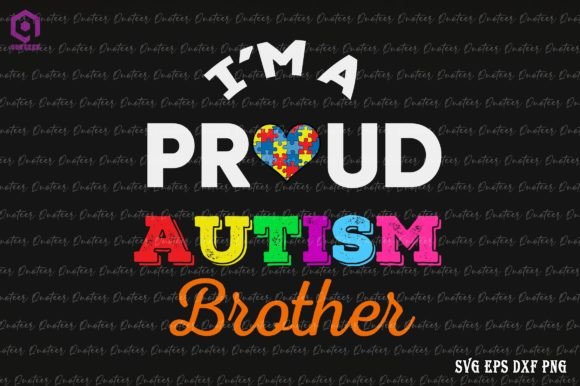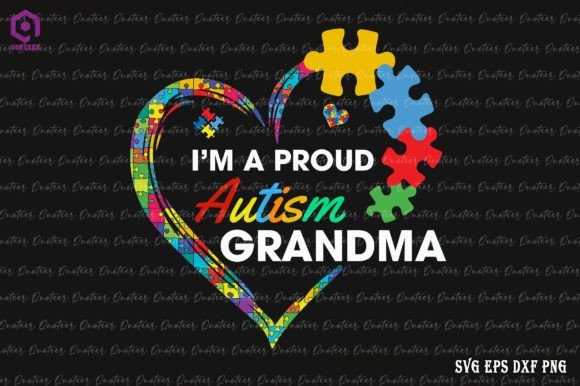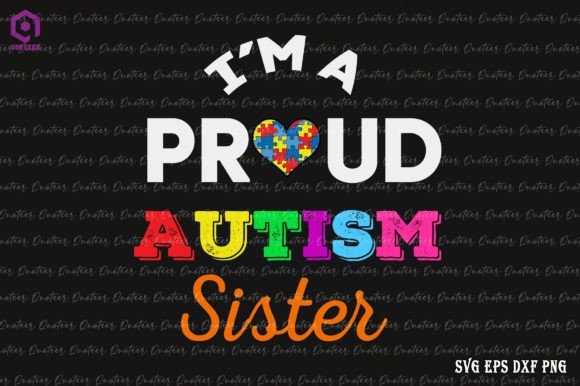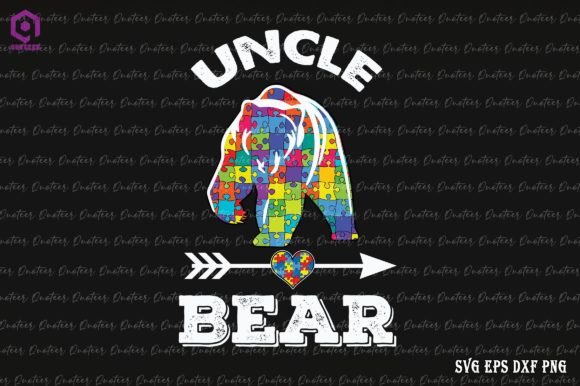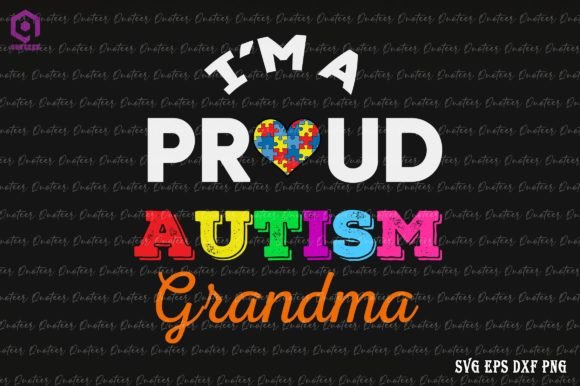
I’m a Proud Autism Grandma Family Graphics
As someone who’s launched over 200 digital product listings across Etsy, Creative Market, and Shopify—and built three print-on-demand shops focused on heartfelt family themes—I opened I’m a Proud Autism Grandma Family expecting warmth, clarity, and commercial readiness. What I found was a clean, emotionally grounded graphic design asset that lands right at the intersection of authenticity and marketability.
The first impression is gentle but confident: soft rounded lettering, balanced spacing, and subtle decorative elements (like a small heart or interlocking hands, depending on the version) that signal care—not clinical distance. It’s not flashy or trend-chasing. Instead, it reads as handmade business meets inclusive storytelling. That makes it ideal for sellers targeting grandparents, autism advocates, neurodiversity educators, and families building meaningful keepsakes—not just decor.
This isn’t a “cute-for-cuteness’-sake” illustration. It feels intentional, respectful, and quietly celebratory—exactly what resonates with buyers searching for printable wall art, greeting cards, or nursery prints that reflect real family identity. It leans feminine but avoids stereotypes; it’s modern without being sterile. For Canva template sellers or digital download shop owners curating seasonal bundles—say, “Grandparent Love” or “Neurodiverse Family Collections”—this design adds emotional weight and visual cohesion.
What’s included is straightforward and production-ready: one ZIP file with an SVG design, a high-res PNG design (with transparent background), a DXF file for Silhouette users, and an EPS file for vector scalability in Adobe apps. No fonts, no layered PSDs—but that’s fine. This is a focused commercial design, not a full branding suite. Its strength lies in simplicity and cross-platform compatibility.
I tested I’m a Proud Autism Grandma Family across six real product formats before finalizing a listing:
- SVG products for Cricut projects: Cut cleanly at 8" wide on vinyl and heat-transfer material. The letterforms hold detail well—even at 4", though I avoided going smaller than 3.5" for iron-on t-shirts.
- PNG design use in printable planner stickers: Works beautifully on matte sticker paper. Transparency is flawless—no halo or edge artifacts.
- Sublimation design on mugs and tumblers: Printed crisply at 300 DPI. Paired best with light-colored substrates and minimalist mockups to let the message breathe.
- Tote bag prints and digital paper packs: Scaled well into 12"x12" seamless repeats when paired with coordinating polka dots or watercolor textures.
- Social media graphics for autism awareness campaigns: Stood out in Instagram carousels and Pinterest pins—especially when placed over soft blurred backgrounds or paired with short, empathetic captions.
- Canva template integration: Dropped seamlessly into greeting card and invitation templates. Works with serif (for warmth), sans serif (for clarity), and light script fonts (for handwritten charm)—but avoid heavy display fonts that compete visually.
Where this graphic design asset shines most is in product mockup presentation. On white or off-white backgrounds, it reads clearly in Etsy thumbnails—even at 400x400px. It builds instant visual hierarchy in bundle listings: imagine pairing it with “Autism Grandparent Journal Pages” or “Sensory-Friendly Birthday Cards” in a themed design bundle. That kind of grouping increases average order value and reinforces small business branding.
It also supports brand identity consistency across channels. Use it once on a mug, again on a printable affirmation card, and again as a blog graphic—it tells a unified story without needing matching colors or logos. That’s rare in niche clipart and pays off in customer trust and repeat engagement.
That said, there are smart limits. Avoid using it for sticker design under 1.5", where letter spacing tightens and legibility drops. Skip dark backgrounds unless you manually add a subtle drop shadow or white stroke—the current version lacks contrast optimization for black or navy substrates. And while the SVG cut lines are clean, don’t rely on it for intricate multi-layered Cricut projects (e.g., shadow layers or compound shapes); it’s a single-layer, positive-space design.
Before publishing any Etsy product, print-on-demand item, or digital download, here’s my checklist:
- Preview the PNG on both white and charcoal mockups—check readability and emotional tone.
- Test the SVG at 3", 6", and 10" in Cricut Design Space—confirm no stray nodes or overlapping paths.
- Print a physical sample on your target paper stock—verify color fidelity and text weight.
- Drop it into a Canva template alongside your brand fonts—see how it balances with headlines and body copy.
- Confirm the commercial license explicitly permits finished goods (not just resale of the files). Most reputable sellers do—but always verify.
- Organize delivery files clearly: label each format plainly (“ImAProudAutismGrandma_SVG”, “_PNG_300DPI”, etc.)—it reduces support requests and boosts review scores.
In practice, I’m a Proud Autism Grandma Family fits best in collections where sincerity matters more than scale: printable products for family therapists, merchandise graphics for advocacy nonprofits, packaging design for sensory-friendly subscription boxes, or blog graphics for parenting content creators. It’s not meant to dominate a homepage banner—but it *does* convert quietly in the right context.
If you’re building a creative marketplace presence around empathy-driven Crafts and Graphics, this is less of a “standalone bestseller” and more of a trust-building anchor—a piece that signals you understand your audience’s values, not just their search terms. Used thoughtfully, it elevates your whole catalog.